Non-Invasive Detection of Ocellated Lizards
- Project Context: The Ocellated Lizard (Timon lepidus) is one of Europe’s largest and most striking lizard species, but it faces significant population declines across much of its range, particularly in France where it is considered a threatened species with a national action plan for its conservation. In regions like the Parc naturel régional de Camargue, proving the presence or absence of these elusive reptiles is critical for accurate population assessments and effective conservation management. Traditional visual surveys are often insufficient due to the lizard’s cryptic nature and the vast, often dense, habitats it occupies.
- Our Objective: Our team was engaged by the Fondation Tour du Valat, a leading research institute dedicated to the conservation of Mediterranean wetlands, to conduct intensive surveys for the Ocellated Lizard. The primary objective was to definitively confirm the presence or absence of these unique lizards within specific areas of the Tour du Valat reserve, utilizing a highly precise, non-invasive method for data collection.
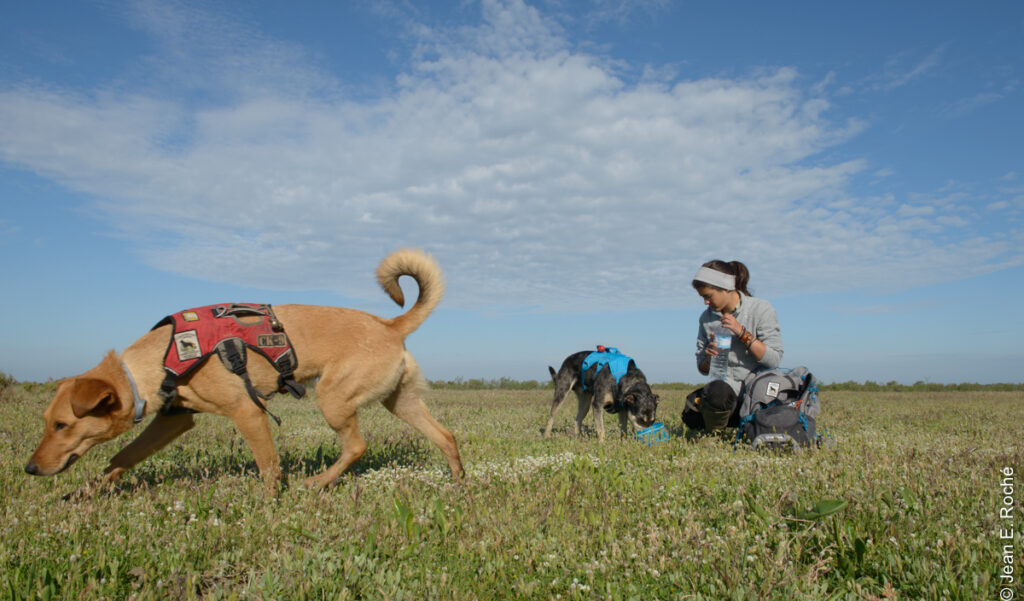
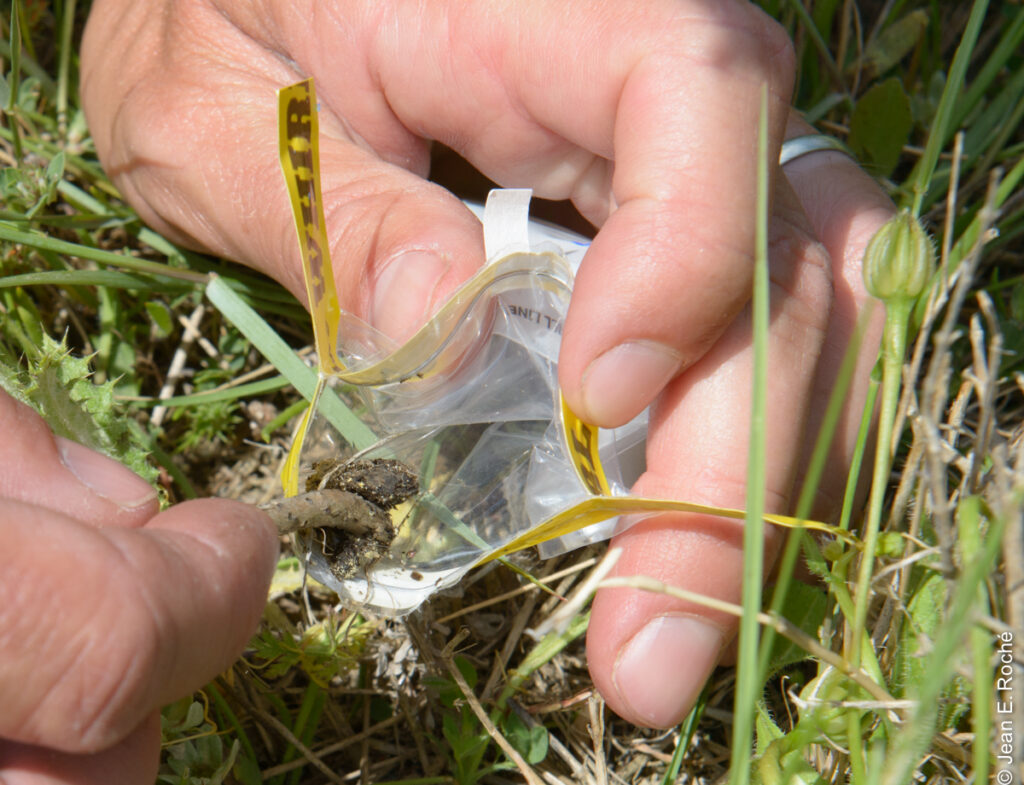
- Methodology: Recognizing the challenges of surveying such an elusive species, our approach relied on a two-dog team. One of our conservation detection dogs was trained exclusively to identify the scat of the Ocellated Lizard. This provided a high degree of precision for locating our target species. To collect additional baseline data, a second dog was trained to identify the scat of not only the Ocellated Lizard but also other coexisting species like the Green Lizard, also known to be present in the survey area. This multi-dog methodology allowed us to collect crucial biological samples non-invasively, providing a more comprehensive understanding of the habitat’s lizard population without disturbing the animals themselves.
- Outcome & Impact: Our two-dog strategy provided precise and valuable insights into the reptile population of the surveyed area.The generalist detection dog, trained to identify the scat of lizards in the area, successfully alerted on several samples. These alerts were confirmed through subsequent genetic analysis, which identified the scats as belonging to the Green Lizard species.In parallel, our specialist dog, trained exclusively on Ocellated Lizard scat, did not alert on any samples.This combined data, supported by genetic confirmation, indicates that the lizard population in the surveyed areas was composed of Green Lizards, with no evidence of the presence of the elusive Ocellated Lizard. This result highlights the accuracy of our non-invasive canine methodology and provides a clear understanding of the species’ distribution.