Cross-Border Canine Support for Apex Predator Conservation
- Project Context: The majestic Brown Bear (Ursus arctos arctos) represents a symbol of wilderness in the Pyrenees mountains, straddling the border between France and Spain. This population is critically endangered, having undergone painstaking reintroduction efforts over recent decades, making every individual and every piece of data vital for its long-term survival. Monitoring these apex predators in their vast, rugged, and often extremely steep and challenging mountainous terrain is a monumental task that requires dedicated efforts and innovative techniques to assess their presence, distribution, and overall population health.
- Our Objective: Our team had the privilege of contributing our specialized canine detection skills to the ongoing brown bear monitoring efforts in the high Pyrenees. Our primary objective was to aid the dedicated conservation work carried out by French and Spanish park rangers by efficiently locating and collecting valuable scat (feces) samples. This non-invasive method provides crucial genetic and ecological data essential for surveying bear populations across this transboundary landscape.
- Methodology: Operating in one of Europe’s most formidable natural environments, our methodology harnessed the superior olfactory capabilities of our conservation detection dogs:
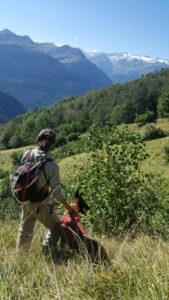
- Our highly trained detection dogs systematically surveyed vast stretches of the Pyrenees, specifically trained to pinpoint the subtle scent signatures of brown bear scat. Their ability to cover extensive, steep, and remote terrain, and to locate elusive samples, significantly enhanced the overall survey efficiency.
- Upon successful detection, scat samples were meticulously collected, adhering to strict scientific protocols to preserve their integrity for genetic analysis. These samples are critical for identifying individual bears, assessing kinship, understanding population structure.
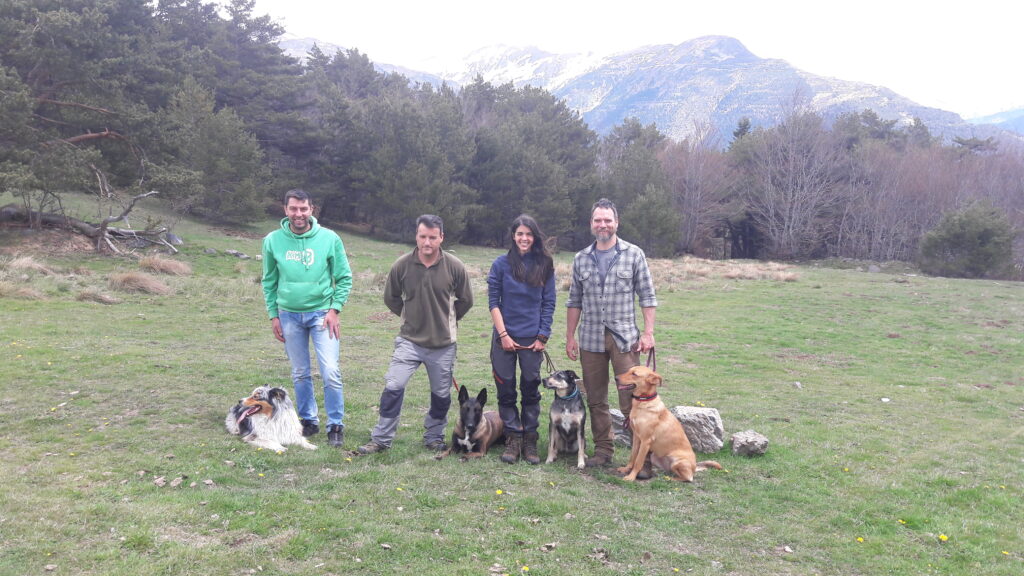
- Our team worked directly alongside both French and Spanish park rangers, integrating our canine search efforts with their broader monitoring strategies, providing direct support to their arduous fieldwork.
- Outcome & Impact: Our successful efforts in locating numerous brown bear scat samples directly contributed to the vital monitoring programs across the Pyrenees. Our work enhanced the data available for understanding this recovering population and demonstrated the effectiveness of canine detection in extreme environments.
- Enhanced Data Collection: We successfully gathered important biological data, crucial for genetic analysis and population assessment of this recovering species.
- Direct Field Support: Our canine team provided invaluable aid to the daily search efforts of both French and Spanish park rangers, helping them cover more ground and locate more samples efficiently in difficult terrain.
Promotion of Transboundary Cooperation: It was incredibly rewarding to be part of a truly multicultural team, with professionals from France and Spain, united by a common goal of preserving this magnificent species through seamless cooperation and shared dedication. This collaborative spirit is essential for conservation efforts that span international borders.