Hedgehog Locust
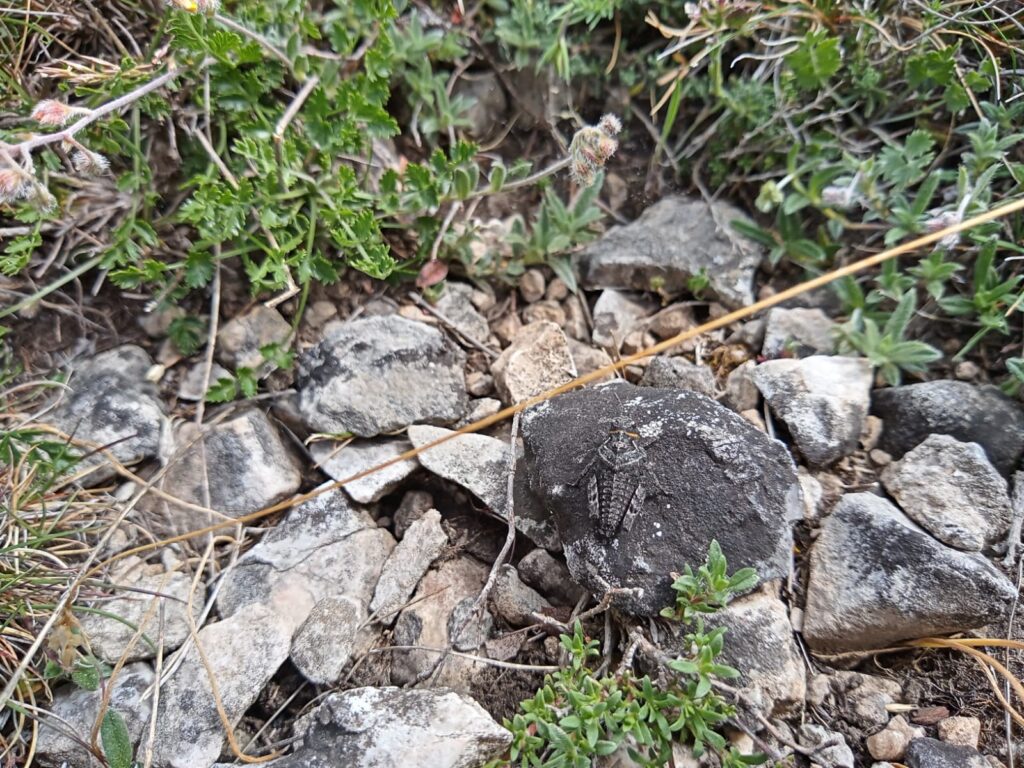
Project Context: The Hedgehog Locust (Prionotropis azami), also known as the Criquet hérisson, is an exceptionally rare and critically endangered orthopteran species, endemic to specific dry grassland and garrigue habitats in the South Pre-Alps of Provence-Alpes-Côte d’Azur, France. Classified as Endangered on national and international red lists, its survival is threatened by habitat loss and fragmentation. This species is a master of camouflage, blending seamlessly into the dry, rocky terrain, making it incredibly difficult to detect through traditional visual surveys. Our previous success in proving the high effectiveness of conservation detection dogs for elusive species, such as the plain crau grasshopper at the Réserve naturelle nationale des Coussouls de Crau laid crucial groundwork for further targeted survey.
Our Objective: Our team was engaged by the Conservatoire d’espaces naturels Provence-Alpes-Côte d’Azur (CEN PACA), a key regional conservation body, for a vital mission on the iconic Montagne Sainte-Victoire in France. Our primary objective was to deploy our specialized canine detection capabilities to survey specific areas, aiming to better understand the distribution and pinpoint the remaining few populations of Prionotropis azami within this challenging and ecologically sensitive mountainous landscape.
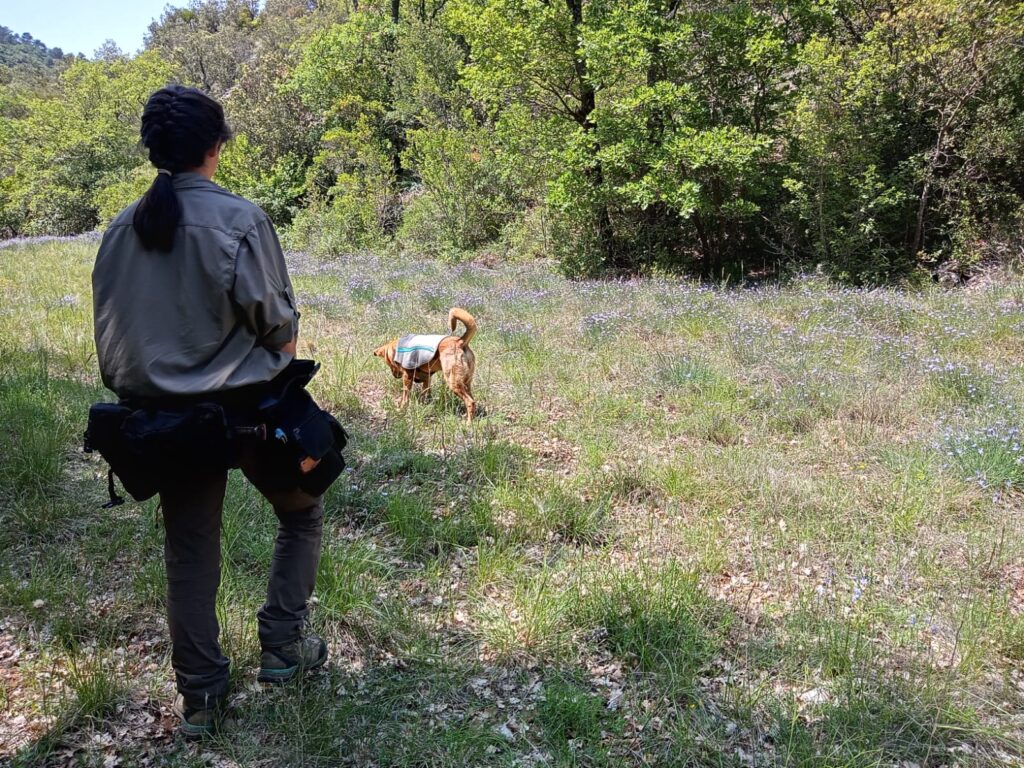
Methodology: Our approach relied entirely on the unparalleled olfactory precision of our conservation detection dogs, proven to be highly effective in locating this cryptic species: Our expertly trained detection dog systematically navigated the steep, rocky, and dry terrains of Montagne Sainte-Victoire. Their acute sense of smell allowed them to detect the subtle presence of Prionotropis azami, even when individuals were perfectly camouflaged and hidden from human sight.
This non-invasive methodology enabled efficient and accurate surveying of vast areas, helping to overcome the inherent difficulties in finding such a rare and elusive insect. The data collected on the precise locations of the Hedgehog Locust populations provided critical information for CEN PACA’s ongoing efforts to protect and manage these fragile habitats.
Outcome & Impact: Our successful surveys on Montagne Sainte-Victoire significantly contributed to the conservation efforts for the critically endangered Hedgehog Locust. By effectively locating previously unknown or poorly understood populations, our work provided CEN PACA with essential data to:
- Map Remaining Populations:
- Create more precise distribution maps for Prionotropis azami, crucial for understanding its current status.
- Inform Targeted Conservation: Identify specific areas requiring protection or habitat management interventions to ensure the species’ survival.
Validate Detection Dog Efficacy: Further demonstrate the indispensable role of highly specialized conservation detection dogs in surveying and monitoring even the most camouflaged and rare invertebrate species in complex environments. This project underscored the power of innovative detection techniques in safeguarding France’s unique and threatened natural heritage.